Simulation code development

In the field of high intensity laser-matter interactions, simulation codes have proven to be vital tools.

Why simulations?

Experimentally, it is extremely difficult to extract a large amount of information about such brief, spatially limited interactions, and there are many experimental parameters to consider.

The high degree of non-linearity and couplings involved in such interactions means that analytical methods can only make a certain amount of progress.

Fields such as wakefield acceleration may never had made the progress that they have without the existence of large plasma simulation codes and high-performance computers (HPC).

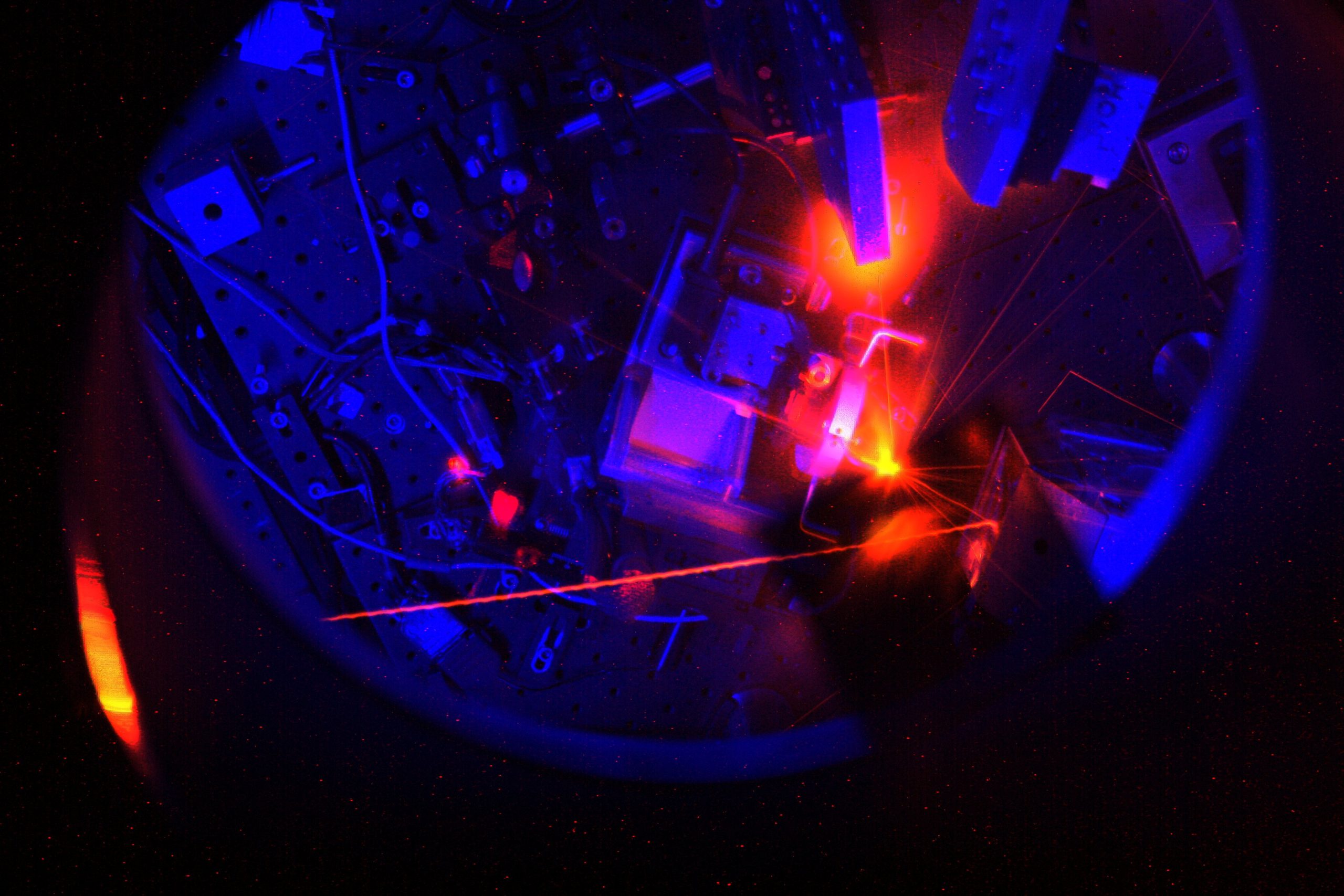
Image of laser

Code from the community and the CLF

In the last decade, team-based code development projects have provided much needed tools to the community.

Most notable are the EPOCH code (1D/2D/3D particle-in-cell (PIC) code) and ODIN (a radiation hydrodynamics code). These received a significant amount of grant funding. EPOCH is freely available to anyone in the world. ODIN will be available to UK researchers.

Together these provide tools that can support a significant amount of ultra-intense short-pulse laser-plasma physics (EPOCH) and inertial confinement fusion (ODIN).

The open nature of EPOCH means that there is great scope for further efforts within the community to add new capabilities to the code, and there are indications that this is bearing fruit. CLF staff members (Robbie Scott and Holger Schmitz) have been involved in both EPOCH and ODIN development.

Although these ‘large scale’ efforts have taken centre stage, the more traditional approach of codes being developed by one or two researchers has continued.

Since the standard PIC code is a versatile tool that can tackle many problems, these ‘small scale’ efforts have been more confined to more niche areas. Examples of this include exploring new approaches to the Vlasov-Fokker-Planck approach (Tony Bell (Oxford and STFC) and Christopher Ridgers (York)), along with hybrid codes for both electron beam transport and ion beam transport (Alex Robinson (STFC)).